What I Did When My Skin Had a Major Reaction (And How I Helped It Heal)

This month, my skin had a major reaction.
Not mild dryness.
Not a small flare.
A full, uncomfortable, reactive moment.
Red. Tight. Hot. Stinging.
Products that normally felt supportive suddenly felt like too much.
It stopped me in my tracks and reminded me of something important:
When the skin barrier is compromised, it doesn’t need correction.
It needs protection.
What Was Actually Happening
When the skin reacts strongly, whether from stress, over-exfoliation, hormones, environmental triggers, or an ingredient sensitivity, the outer barrier becomes disrupted.
The skin barrier is responsible for:
Retaining moisture
Protecting against irritants
Regulating inflammation
When it’s compromised, you may notice:
Increased water loss and tightness
Heightened redness
Stinging with products that previously felt fine
Small bumps or texture changes
Slower healing
In simple terms: the barrier is “open,” and everything feels amplified.
The Mistake We Often Make
When skin feels inflamed or reactive, it’s tempting to add soothing masks, try new calming serums, layer more products for relief, or even switch routines entirely,
But when the barrier is compromised, even good products can overwhelm it.
The most advanced thing I could do in that moment was simplify.
What I Stopped Doing
For two weeks I removed exfoliants, actives, essential oil blends, anything new, and anything stimulating.
No experimenting. No rotating products. No “just one more thing.”
I gave my skin space.
What I Focused On Instead
Three simple principles:
1. Gentle Cleansing
No stripping cleansers.
No hot water.
No friction.
Just enough cleansing to remove buildup without disturbing natural lipids.
2. Hydration (On Damp Skin)
Hydration matters but only if it’s sealed in.
Applying hydration to slightly damp skin helps reduce transepidermal water loss (TEWL) and supports plumpness while the barrier is healing.
3. Lipid Support
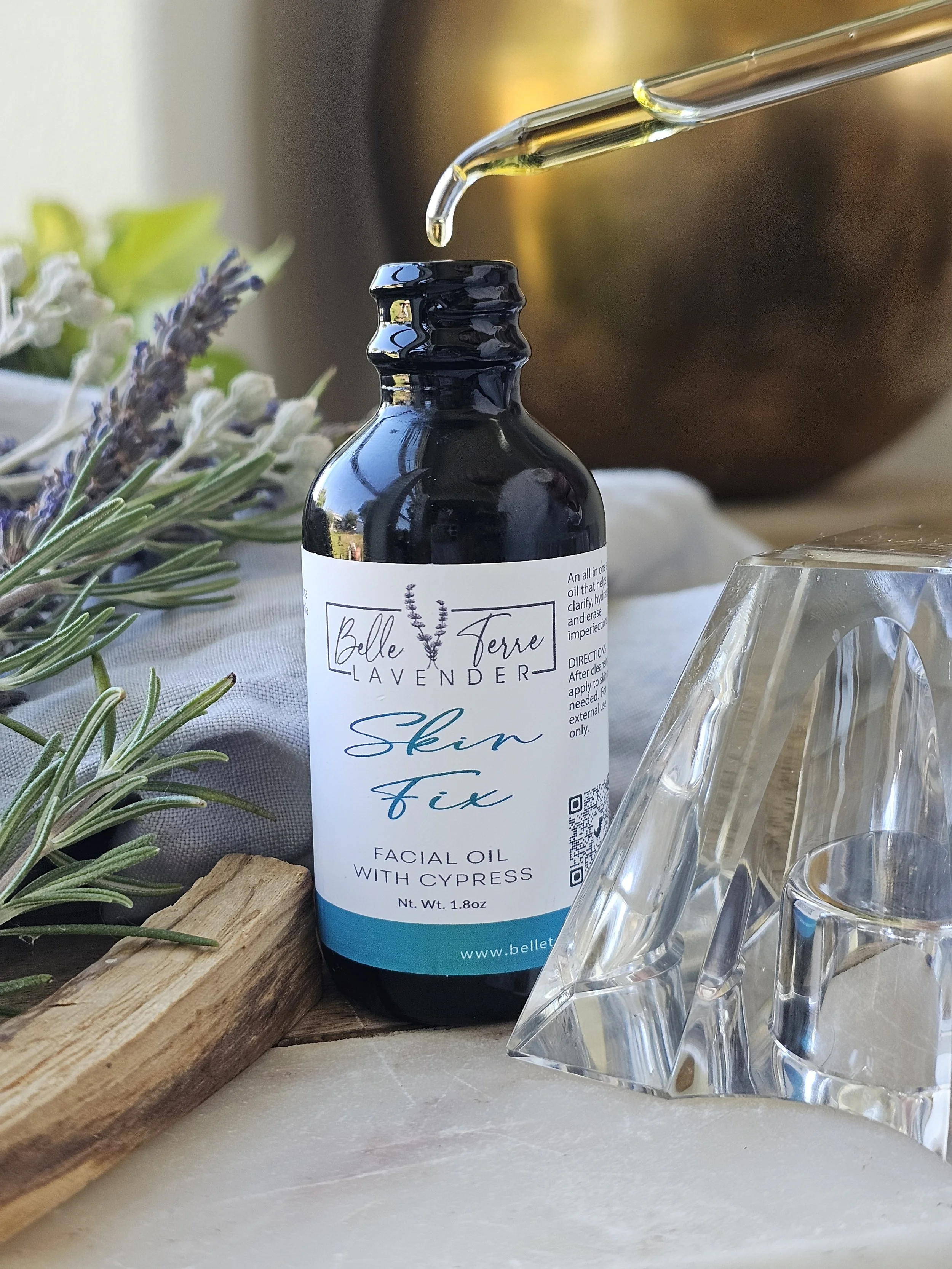
This was the anchor, and I leaned heavily on Skin Fix facial oil.
When the barrier is compromised, lipids are critical. The skin barrier is made up largely of fatty acids and ceramides, and when those are depleted, water escapes more easily and irritation increases.
Facial oils help reinforce the lipid barrier, reduce moisture loss, support elasticity, and create a protective seal while the skin repairs.
I often used just hydrosol and Skin Fix at night. Nothing layered. Nothing complicated.
Within days, the heat began to soften.
Within a week, the redness decreased.
Within two weeks, my skin felt like itself again.
Why Lipids Matter More Than Actives During Repair
Active ingredients, even gentle ones, stimulate the skin.
Barrier repair requires the opposite.
It requires:
Reduced stimulation
Consistent hydration
Lipid replenishment
Time
When the nervous system is stressed, the skin often mirrors that stress. Simplifying the routine reduces not just physical irritation, but physiological stress signals.
Repair is quiet work.
If Your Skin Feels “Off”
If your skin feels:
Tight
Stinging
Suddenly reactive
Overwhelmed
Consider doing less.
For 2–3 weeks:
Stop exfoliating
Avoid introducing anything new
Focus on hydration + lipid support
Keep cleansing gentle
Be patient
Skin wants to heal. It just needs the right conditions.
What This Taught Me
Barrier repair isn’t dramatic.
It’s restraint.
It’s consistency.
It’s trusting the body’s ability to recalibrate.
Sometimes the most advanced thing you can do for your skin is simplify.
And sometimes healing looks like less , not more.
With care,
Belle Terre Lavender
STAY CONNECTED WITH US